Learn Pickleball
Everything you need to know about the fastest-growing sport in the world.
| What is Pickleball?
Pickleball is a dynamic paddle sport that combines elements of tennis, badminton, and table tennis. Played on a court roughly one-third the size of a tennis court, it uses a perforated polymer ball and solid paddles made from composite materials.
The sport is accessible to players of all ages and skill levels, making it perfect for families, seniors, and competitive athletes alike. Games are typically played to 11 points (win by 2) and can be enjoyed as singles or doubles.
What makes pickleball special is its low barrier to entry — most beginners can rally within minutes — while still offering deep strategic play for advanced competitors.
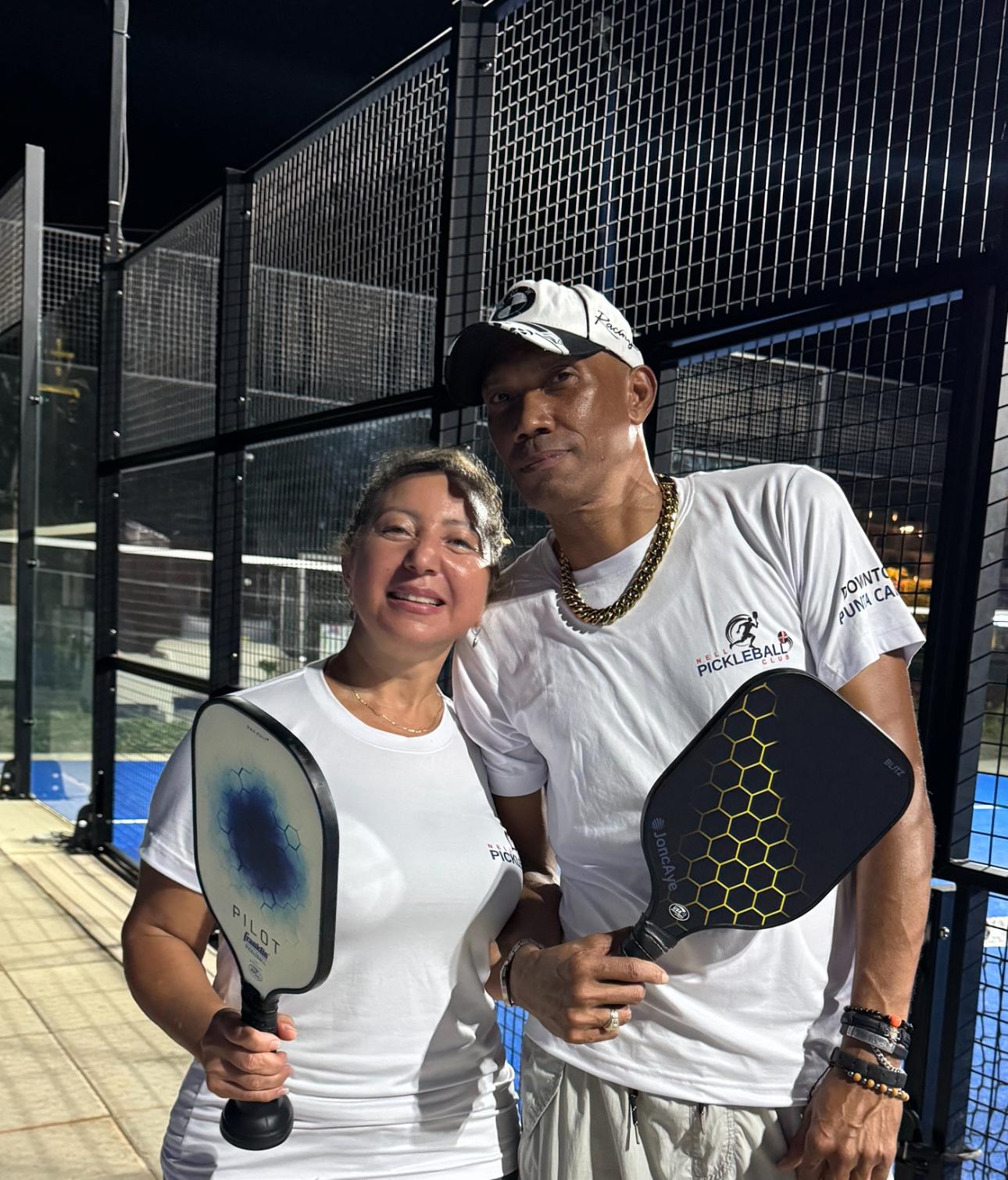
Social & Fun
The smaller court size means you're always close to your opponents, creating a social atmosphere and natural conversation.
Great Exercise
A typical game burns 350-475 calories per hour while being easier on joints than tennis or running.
Easy to Learn
Simple rules and an underhand serve make pickleball one of the easiest racquet sports to pick up.
| History & Origin
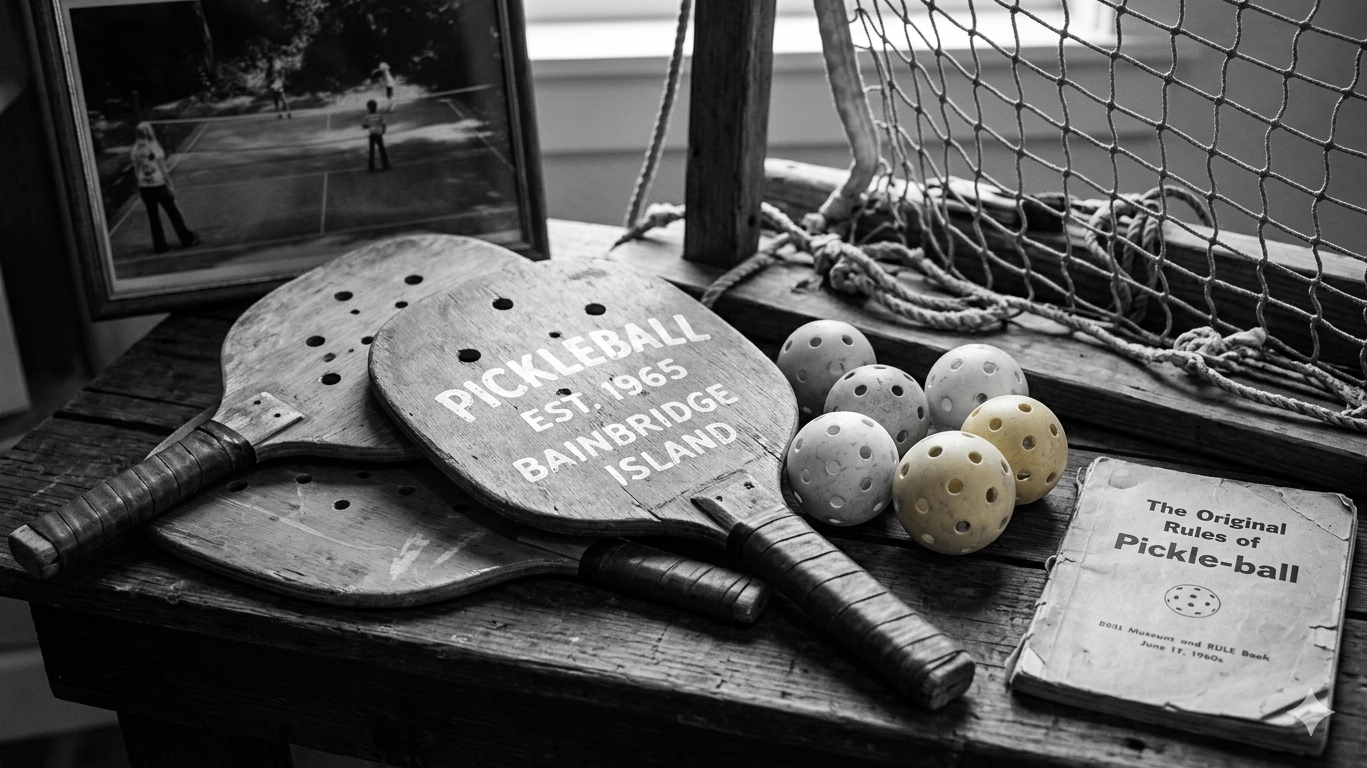
Pickleball was invented in the summer of 1965 on Bainbridge Island, Washington, by three fathers — Joel Pritchard, Bill Bell, and Barney McCallum — who were looking for a way to entertain their bored children during a weekend getaway.
They improvised with ping-pong paddles, a perforated plastic ball, and a badminton court with a lowered net. The game was such a hit that the families began crafting official rules, and the sport quickly spread through their community.
As for the name? The most popular theory credits Joan Pritchard, Joel's wife, who thought the combination of sports reminded her of a "pickle boat" in crew — a boat crewed by leftover rowers from other boats.
Invented on Bainbridge Island, WA
First known corporation formed to protect the sport
USA Pickleball Association founded
36+ million players in the US alone
| Basic Rules
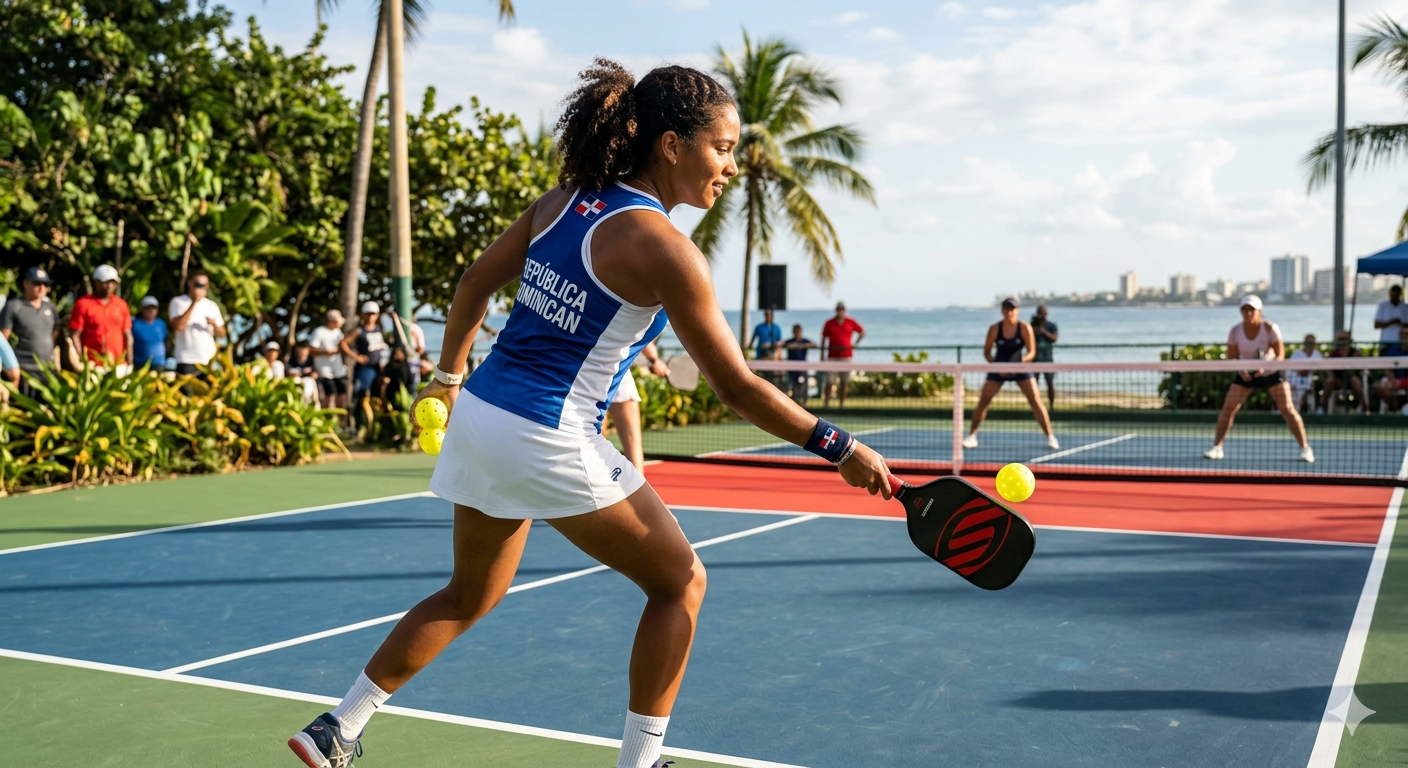
The Serve
- ▸Must be made underhand with the paddle contacting the ball below the waist
- ▸Served diagonally cross-court, clearing the non-volley zone
- ▸Only one serve attempt is allowed (no "let" re-serves on net serves since 2021)
- ▸The server must keep both feet behind the baseline during the serve
2xTwo-Bounce Rule
After the serve, the receiving side must let the ball bounce once before returning. Then the serving side must also let the return bounce once. After these two bounces, the ball can be volleyed or played off the bounce.
⚠The Kitchen (Non-Volley Zone)
The 7-foot zone on each side of the net is called the "kitchen." Players cannot volley (hit the ball out of the air) while standing in the kitchen. You can enter the kitchen to play a ball that has bounced.
Common Faults
| Scoring
Pickleball uses side-out scoring in recreational play (only the serving team can score) and rally scoring in some competitive formats. Here's how it works:
Reading the Score
In doubles, the score is called as three numbers. The third number indicates which server (1st or 2nd) is serving.
Side-Out Scoring (Traditional)
- ▸Games played to 11 points, win by 2
- ▸Only the serving team can score points
- ▸In doubles, both partners serve before a side-out
- ▸At the start of the game, only one partner serves
Rally Scoring (MLP / Competitive)
- ▸Every rally results in a point, regardless of who served
- ▸Games typically played to 21, win by 2
- ▸Speeds up matches and reduces game length variability
- ▸Used in Major League Pickleball (MLP) events
| Court Dimensions
A standard pickleball court is 20 feet wide by 44 feet long — the same size for both singles and doubles play. The net stands 36 inches high at the sidelines and 34 inches at the center.
Court Size
20' x 44' — about 1/3 the size of a tennis court. Requires less movement and is easier on the body.
Net Height
36" at the sidelines and 34" at the center. Slightly lower than a tennis net, encouraging more net play.
Kitchen Zone
7 feet on each side of the net. No volleying allowed in this zone — the most unique rule in pickleball.
| Equipment
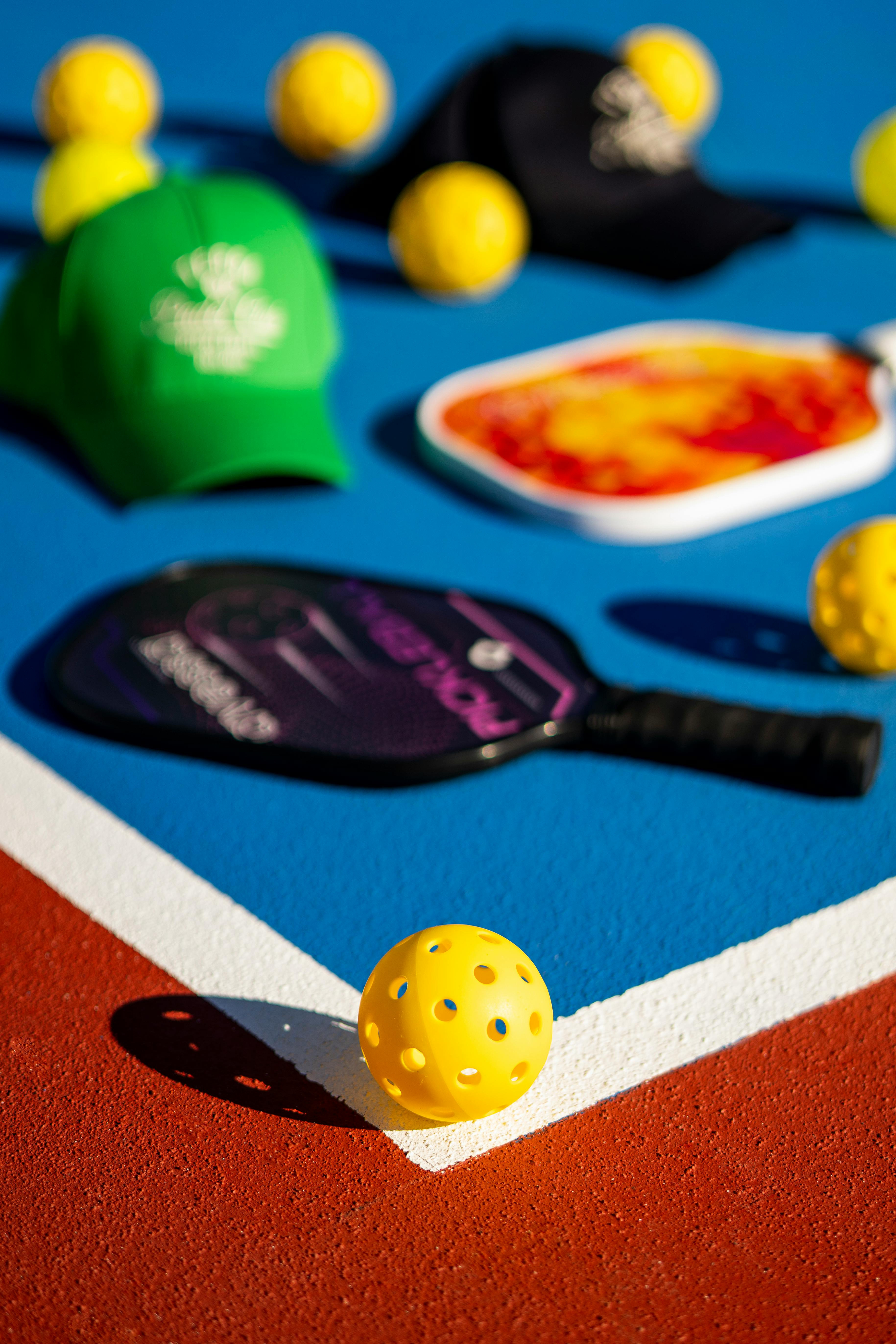
Getting started with pickleball requires minimal equipment. Here's what you need to know about each piece of gear:
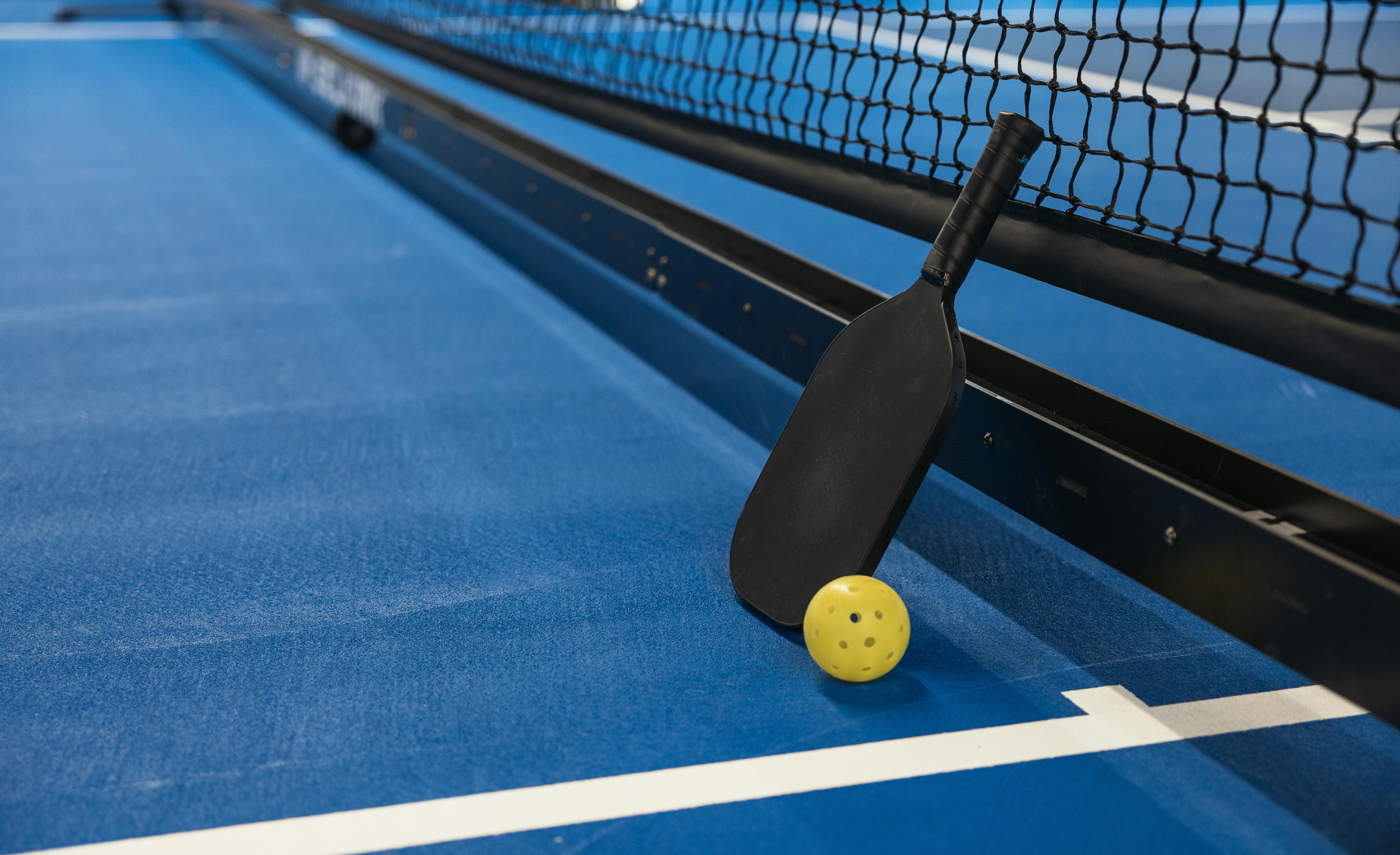
Paddles
Paddles are solid (no strings) and made from composite materials like fiberglass, carbon fiber, or graphite. They range from $15 for beginner models to $250+ for premium competition paddles.
Balls
Pickleballs are lightweight, perforated polymer balls similar to wiffle balls. Indoor and outdoor balls differ in the number and size of holes, weight, and durability.
Court Shoes
Court shoes with non-marking soles provide lateral support and traction. Avoid running shoes — they lack side-to-side stability.
Apparel
Moisture-wicking athletic clothing is recommended. Many players wear shorts/skirts, a breathable top, and a hat or visor for outdoor play.
Accessories
Overgrips for better handle feel, protective eyewear, sweatbands, and a paddle bag to protect your equipment.
| Essential Shots
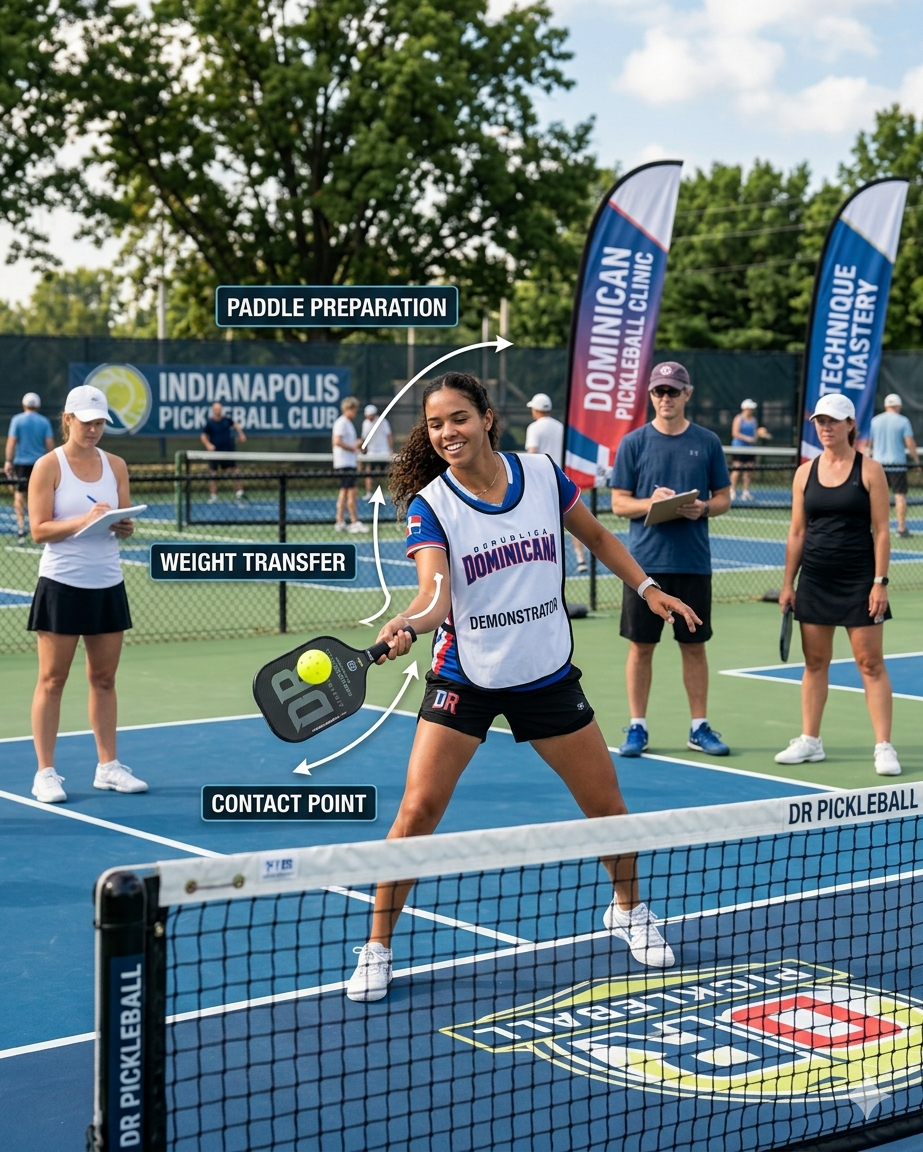
Mastering these fundamental shots will give you a solid foundation for competitive play:
Dink
A soft, controlled shot that arcs over the net and lands in the opponent's kitchen. The cornerstone of advanced play.
Third Shot Drop
A soft shot from the baseline that drops into the kitchen, allowing the serving team to approach the net.
Drive
A hard, flat shot aimed low over the net. Used to put pressure on opponents or create offensive opportunities.
Volley
Hitting the ball out of the air before it bounces. Essential for fast exchanges at the kitchen line.
Lob
A high, arcing shot sent over opponents who are positioned at the net. Effective when timed correctly.
Erne
An advanced shot where a player jumps around or over the kitchen to volley a ball near the net from outside the court.
| Strategy & Tips
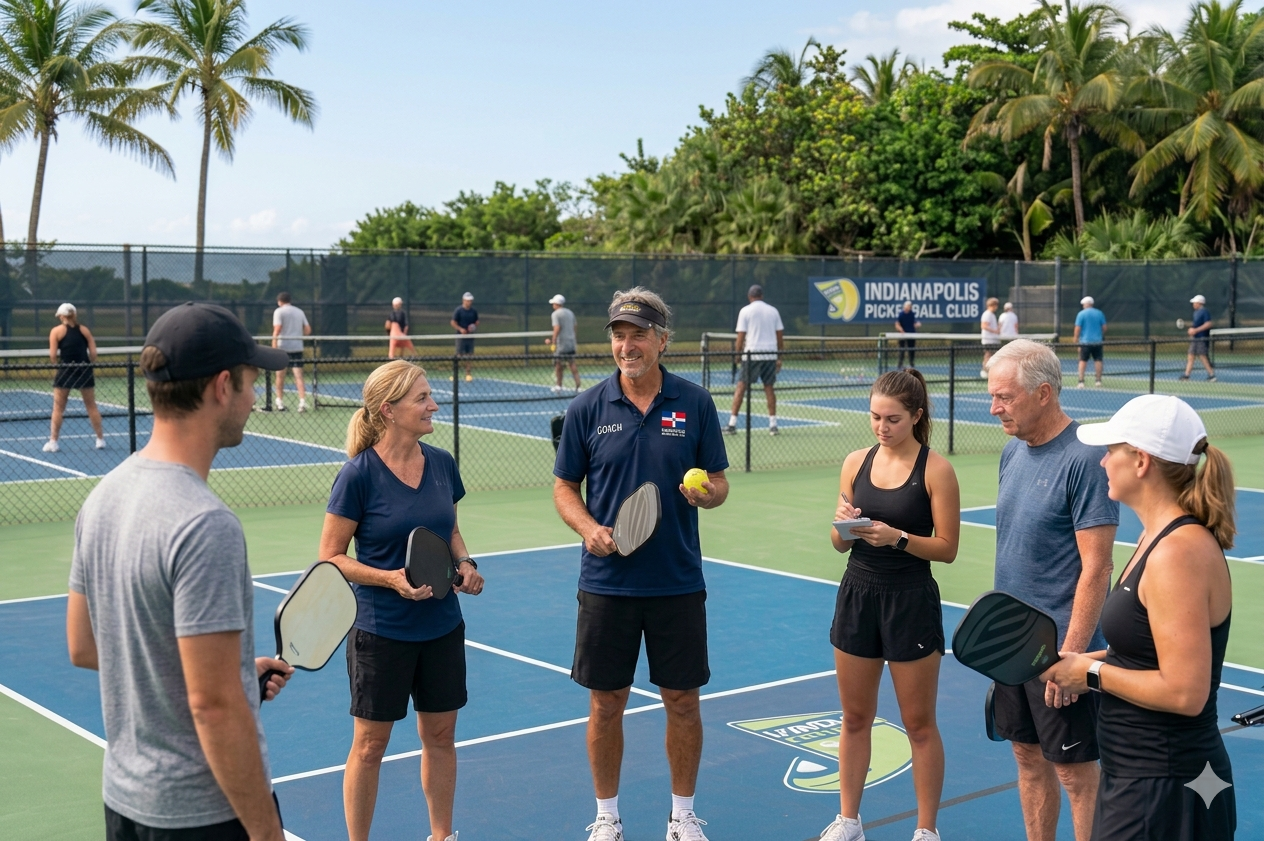
Pickleball strategy revolves around one key principle: control the kitchen line. The team that controls the net has a significant advantage. Here are essential strategies for improving your game:
Get to the Kitchen Line
After the return of serve, move toward the net as quickly as possible. The kitchen line is the most advantageous position on the court.
Keep the Ball Low
Shots that stay low over the net force your opponents to hit upward, giving you opportunities for put-away shots.
Be Patient
Don't try to hit winners on every shot. Build points through consistent dinking and wait for your opponent to make a mistake.
Target the Middle
In doubles, hitting to the middle creates confusion about who should take the shot and reduces the angle of return.
Move as a Team
In doubles, stay aligned with your partner. Move together laterally to cover the court without leaving gaps.
| Court Etiquette
Pickleball has a strong culture of sportsmanship. Following these unwritten rules will make you a welcome player at any court:
Paddle Tap
Tap paddles with all players before and after each game — it's the pickleball handshake.
Call the Score
Always announce the score clearly before serving. This keeps everyone on the same page.
Call Your Lines
If you're closest to the line, make the call. When in doubt, the ball is in. Give your opponents the benefit.
Rotate Fairly
During open play, rotate off the court after each game so waiting players get a turn.
Cross Behind Courts
Never walk behind a court during active play. Wait for the point to end, then cross quickly.
Celebrate Respectfully
Celebrate your great shots but avoid celebrating opponents' errors. Keep the vibe positive.
| FAQ
Q.How long does a typical game last?
A recreational game usually takes 15-25 minutes. Tournament matches can last 30-60 minutes depending on the format.
Q.Can I play pickleball on a tennis court?
Yes! You can set up temporary pickleball lines on a tennis court. In fact, you can fit up to 4 pickleball courts on a single tennis court.
Q.Is pickleball good exercise?
Absolutely. Pickleball provides a full-body workout that improves cardiovascular health, balance, agility, and hand-eye coordination — burning 350-475 calories per hour.
Q.What's the difference between indoor and outdoor pickleball?
Indoor pickleball uses a softer ball with larger holes (slower play) on gym floors. Outdoor uses a harder ball with smaller holes (faster play) and is affected by wind.
Q.How much does it cost to get started?
A beginner paddle costs $15-50, and balls are around $3-5 each. Many community centers and clubs provide equipment for beginners to try.
Q.Can kids play pickleball?
Yes! Pickleball is excellent for children. The smaller court, lighter equipment, and simple rules make it accessible for kids as young as 5-6 years old.